Shelf Life at What Cost? A Closer Look at BHA in Processed Foods

There’s a reason some snack foods taste the same months after you buy them.
There’s a reason oils in boxed cereals don’t smell rancid.
There’s a reason packaged baked goods can sit on a shelf far longer than anything homemade.
Often, that reason is BHA.
Let’s slow this down and look at what that actually means.
🧪 What Is BHA — Really?
Butylated Hydroxyanisole (BHA) is a lab-created preservative.
Its job is simple:
It keeps fats from oxidizing.
Oxidation is what makes oils go rancid.
BHA slows that process down.
It does not improve nutrition.
It does not improve flavor.
It protects the product’s shelf life.
And in large-scale food manufacturing, shelf life is everything.
🛒 Where You’re Most Likely to Find It
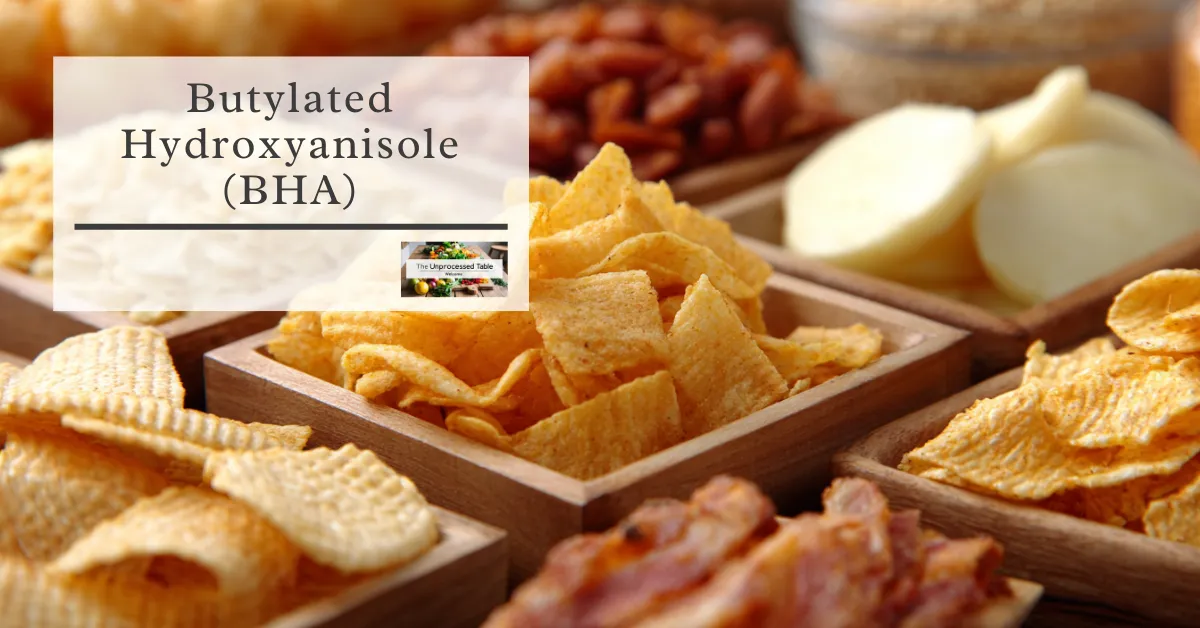
BHA tends to appear in foods that contain added fats or oils and need long-term stability, including:
Processed snack chips
Boxed breakfast cereals
Packaged baked goods
Shelf-stable mashed potato products
Processed meats
Chewing gum
It may appear as “Butylated Hydroxyanisole” or simply “BHA” on labels.
If the product can sit unopened for many months without changing, there’s a chance preservatives like this are involved.
🔬 Why It Continues to Be Studied
Scientific discussion around BHA has been ongoing for decades.
The National Toxicology Program lists BHA as “reasonably anticipated to be a human carcinogen” based on animal research.
The International Agency for Research on Cancer classifies it as “possibly carcinogenic to humans.”
Meanwhile, the U.S. Food and Drug Administration allows BHA to be used in food within regulated limits.
What does that mean for everyday families?
It means the ingredient is legally permitted — but long-term exposure remains part of scientific discussion.
That’s not alarm.
That’s context.
🥣 A Real Food Question Worth Asking
When did we decide food needed to last a year?
Before synthetic preservatives, food stability came from:
• Smaller batch production
• Traditional preservation methods
• Eating seasonally
• Storing fats properly
Real food spoils.
That isn’t a flaw — it’s a signal.
When something never changes, that’s worth noticing.
🌿 Practical Swaps (Without Overcomplicating Life)
You don’t have to clear your pantry tonight.
But you can:
✔ Choose snacks with shorter ingredient lists
✔ Store nuts and seeds in the freezer to protect natural oils
✔ Make simple homemade granola instead of boxed cereals
✔ Buy smaller quantities more often
These aren’t extreme changes.
They’re gradual shifts.
🌸 Flora Flash
In the 1950s and 60s, “longer shelf life” became a marketing triumph. The ability to mass-produce food that wouldn’t spoil quickly symbolized modern efficiency.
Today, many families are quietly redefining that definition of convenience.
Sometimes freshness is the real luxury.
🧘🏽♀️ The Gentle Takeaway
BHA isn’t loud.
It doesn’t advertise itself.
But it represents something bigger:
The trade-off between convenience and simplicity.
The goal isn’t perfection.
It’s awareness.
And awareness lets you decide:
Do you want food engineered for the shelf —
or food made for the table? 🌿


